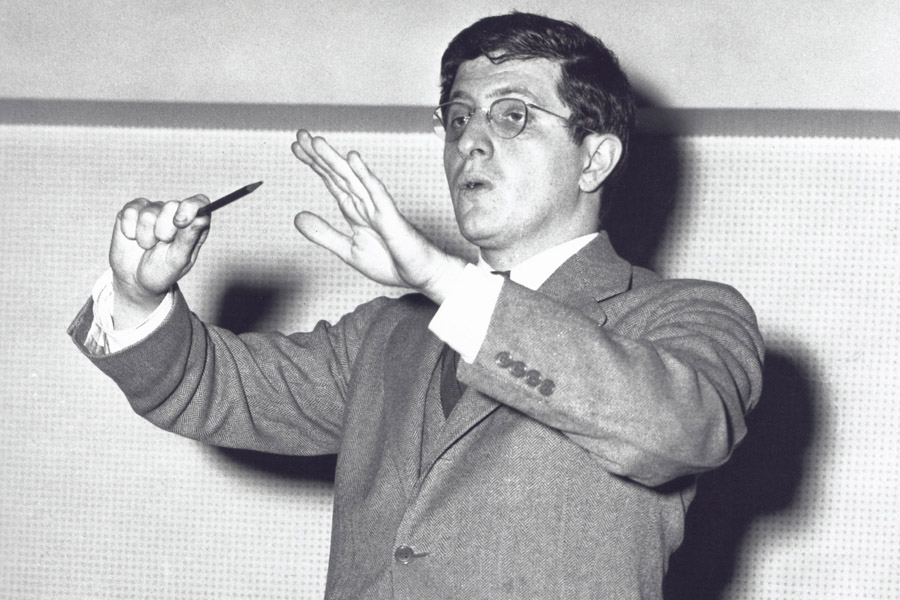
Bernard Hermann and the Force of His Reputation
I imagine Bernard Hermann’s music moving like weather across a gloomy skyline. One of the most prominent American composers of the 20th century, his music infused pictures. He changed cinema sound for generations in 64 years, born June 29, 1911, in New York City, and dying December 24, 1975.
Most musical and historical documentation spells his name Bernard Herrmann, and most listeners know him that way. The moniker still describes a ferociously creative composer, conductor, radio inventor, and artistic warrior whose film, opera, and concert hall work is electric. I perceive him as paradoxical. He was romantic but aggressive, intellectual but instinctive, rigorous in practice but capable of exquisite emotional compassion in music.
More than 50 film scores bear his signature spirit. Among them are Citizen Kane, The Magnificent Ambersons, Vertigo, North by Northwest, Psycho, The Day the Earth Stood Still, and Taxi Driver. Those titles alone map a continent of modern screen music.
Early Life in New York City
Bernard Hermann was born into a Russian Jewish immigrant family in New York City. His home life appears to have been both cultivated and combustible. I picture a household full of strong beliefs, sharp voices, and powerful expectations. It was intellectually alive, yet rarely calm.
His father supported his early music interest, which mattered. Bernard started with the violin as a child, a traditional approach to learn music. His imagination seemed to go beyond the conventional even then. He was not just taking notes. He studied atmosphere, tension, and form.
New York University and Juilliard School helped him improve his technique. He had tools from formal schooling, but his voice was never scholarly. One can see the beginnings of a style that would turn orchestras into psychological instruments in his adolescence.
His Parents and the Family Climate
Bernard’s parents played a major role in forming the person he became.
His mother, Ida Gorenstein, also known as Chaika “Ida” Herrmann, was highly religious. Her presence added moral intensity and spiritual structure to the home. That kind of atmosphere can provide stability, but it can also create tension for a child with enormous inward force.
His father, Abraham Dardick, subsequently Herrmann, was an optician and Russian Jewish immigrant with a colorful past. He was associated with plantations and whaling before moving to New York. His past makes him seem almost novelistic, as if he had lived multiple lives before family. He supposedly altered the family name, another example of American immigrant creativity.
Bernard’s music often sounds like it came from someone who knew order and conflict, therefore this family background is crucial. The household seemed to provide both. His father encouraged his music while the home was tense. Such conditions influence many artists. They may have shaped Bernard Hermann’s character.
Education, Discipline, and Early Ambition
By the 1920s and 1930s, Bernard Hermann was moving decisively toward a life in music. Study at NYU and Juilliard gave him access to theory, orchestration, repertoire, and the serious traditions of composition. Yet he never became a museum composer. His music always remained alive to drama.
I think this is part of what made him exceptional. He did not treat music as decoration. He treated it as narrative pressure. He could make a score pulse like a second script running underneath the first.
Before his major film career, he built his reputation in broadcasting and conducting. That world demanded precision, speed, and authority. It suited both his gifts and his temperament.
CBS, Radio, and the Road to Film
Bernard Hermann began as a conductor for the CBS Symphony Orchestra. In radio, he found a medium that trained him to paint with sound alone. Without images, everything had to be carried by timing, tone, and imagination. This sharpened his instinct for drama.
He also composed for radio, including work tied to the legendary War of the Worlds broadcast. That connection placed him at the center of one of the most famous moments in American broadcast history. Radio was his laboratory. Film would become his empire.
The transition to cinema was not a change of identity so much as an expansion of scale. He did not think of himself merely as a technician for movies. He saw himself as a serious composer working through a modern medium. That distinction mattered deeply to him.
The Great Film Scores and a New Language of Suspense
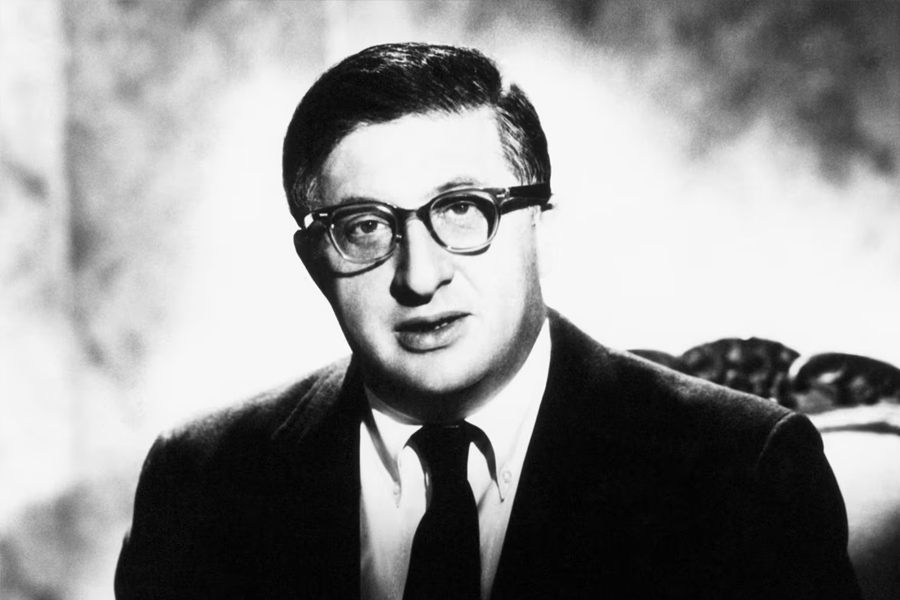
If I had to describe Bernard Hermann’s achievement in one phrase, I would say he taught film music how to think nervously. His scores do not simply tell us what to feel. They make us feel the inner machinery of fear, obsession, longing, and dread.
Working with Orson Welles helped him gain early film fame. Citizen Kane and The Magnificent Ambersons showcased his bold atmosphere and character shaping. Later, he collaborated with Alfred Hitchcock on some of cinema’s most memorable images and sounds.
Psycho’s all-string music is one of his most renowned. Lean, cold, cutting, and memorable. The shower scene alone transformed cinema music perceptions. He composed music that circles the listener like smoke in a confined room with Vertigo. He moved North by Northwest almost architecturally.
Here is a brief snapshot of key landmarks in his career:
| Year | Work or Event | Importance |
|---|---|---|
| 1911 | Born in New York City | Beginning of his life and legacy |
| 1930s | CBS Symphony and radio work | Built reputation as conductor and composer |
| 1939 | Married Lucille Fletcher | Start of first family chapter |
| 1941 | Academy Award for The Devil and Daniel Webster | Major early recognition |
| 1941 | Citizen Kane | Landmark film score |
| 1945 | Second daughter born | Family life expands |
| 1960 | Psycho | Revolutionary suspense score |
| 1967 | Married Norma Shepherd | Final marriage and later stability |
| 1975 | Completed Taxi Driver | Final masterpiece |
| 1975 | Died in Los Angeles | End of his life at age 64 |
He later received a posthumous BAFTA for Taxi Driver, a final reminder that his creative power endured until the end.
Personality, Temperament, and Creative Fire
The volatile, perfectionist Bernard Hermann has trouble in personal and professional relationships. Many who respected his genius felt his rage and blast radius. I don’t think this is a romantic explanation for poor behavior, but his temperament and work seemed inextricably linked.
He demanded precision because he heard things inwardly with unusual clarity. In some artists, imagination arrives like a river. In him, it seems to have arrived like a storm front. His scores are exacting, and so was he.
He also carried deep romantic feeling, especially in lesser known concert works and in his opera Wuthering Heights. That side of him matters. Beneath the public image of the combative master was a man drawn to literature, emotional depth, and sweeping inner landscapes.
The Women in His Life
Bernard Hermann married three times, and each marriage marks a different emotional chapter.
Wed Lucille Fletcher in 1939, his first wife. She was a creative collaborator, spouse, and radio playwright and librettist. She worked with him on Wuthering Heights, suggesting a romantic and artistic partnership. Passionate and tumultuous marriage. The relationship was strained by his career, notably opera. Divorced 1948.
Lucy Anderson (also Lucille or Kathy Lucille Anderson) was his second wife. A relative of Lucille Fletcher. She was Bernard’s wife from 1949 till 1964. This part is less well-known, yet it ended in divorce. The length alone implies an important middle time in his life, even without dramatic tale.
British journalist Norma Shepherd was his third wife, 27 years younger. Marriage in 1967, they lived together until his 1975 death. She met him in England and was crucial to his subsequent life. She kept him company in his latter years and eventually helped preserve his legacy through interviews and estate matters. After the composer died, she helped keep the flame burning.
His Children and Family Legacy
From his first marriage to Lucille Fletcher came two daughters: Dorothy Herrmann, born in 1941, and Wendy Herrmann, born in 1945. These two daughters connect the public legend to private family life.
Dorothy has talked about her father in interviews and events, making family memories more personal. That matters because Bernard Hermann can appear nearly carved in black marble. His daughter’s memories bring home, routine, tenderness, and tension back.
Wendy, too, belongs to that personal legacy, even if she appears less frequently in public discussions. Together, Dorothy and Wendy represent the family thread that continued beyond his final score and final curtain.
Despite his challenging nature and turbulent marriages, he maintained relationships with his daughters later in life. This reveals a guy more complex than the unattainable brilliance. Although he wounded connections, he did not abandon them.
Later Years, Health, and Final Work
Some accounts note childhood health struggles, including Sydenham’s syndrome, and later physical difficulties as well. Whether in youth or adulthood, illness adds another layer to the portrait: an artist carrying vulnerability inside a famously forceful exterior.
In the late 1960s and 1970s, he experienced changing cinema music tastes and industry styles. But he stayed fierce. Taxi Driver followed. The film is a classic of late cinema, full of nighttime uneasiness, loneliness, and danger. Score is like blade-reflected city light.
He completed it just before his death in Los Angeles on Christmas Eve, December 24, 1975. That timing gives his final days an almost mythic poignancy. He finished one last haunting statement and then was gone.
Lasting Influence and Ongoing Recognition
Bernard Hermann’s legacy lives on in cinema, concerts, records, and culture. On his 50th death anniversary in 2025, orchestral concerts, new recordings, reissues, and inventive interpretations have revived his collection. Because it never followed fashion, his music resonates today. It was based on emotional truth distilled.
No public net worth figure defines his legacy, although licensing, recordings, and preservation initiatives produce royalties. His riches is a poor metric. His fortune is perseverance. His music haunts, sings, whispers, and fires.
FAQ
Who was Bernard Hermann?
Bernard Hermann was an American composer and conductor born on June 29, 1911, in New York City. He became one of the most important figures in film music, known for scores such as Psycho, Vertigo, Citizen Kane, and Taxi Driver.
Why is Bernard Hermann so important in film history?
He transformed film scoring by using music as a psychological force rather than simple background accompaniment. I see his greatest innovation in how he captured fear, obsession, tension, and emotional instability with unusual precision.
Who were Bernard Hermann’s parents?
His parents were Ida Gorenstein and Abraham Dardick, later known as Herrmann. Ida was known for her strong religious character, while Abraham was an optometrist and immigrant whose adventurous past and support for Bernard’s musical interests shaped the household.
Who was Bernard Hermann married to?
He was married three times. His wives were Lucille Fletcher from 1939 to 1948, Lucy Anderson from 1949 to 1964, and Norma Shepherd from 1967 until his death in 1975.
Did Bernard Hermann have children?
Yes. He had two daughters with his first wife, Lucille Fletcher: Dorothy Herrmann, born in 1941, and Wendy Herrmann, born in 1945.
What was Bernard Hermann’s relationship with Lucille Fletcher?
Lucille Fletcher was both his wife and a creative collaborator. Their marriage was passionate and artistically rich, but also strained and stormy, especially under the pressure of his work on Wuthering Heights.
What role did Norma Shepherd play in his later life?
Norma Shepherd, his third wife, offered support during his later years and remained important in preserving his legacy after his death. She has helped keep public attention on both the man and the music.
What are Bernard Hermann’s most famous works?
His most famous scores include Citizen Kane, The Magnificent Ambersons, The Day the Earth Stood Still, Vertigo, North by Northwest, Psycho, and Taxi Driver. He also won an Academy Award for The Devil and Daniel Webster in 1941.
Did Bernard Hermann write only film music?
No. Although film made him famous, he also worked in radio, conducted major orchestras, composed concert music, and wrote the opera Wuthering Heights. He did not like being confined to the label of film composer alone.
When and how did Bernard Hermann die?
He died in Los Angeles on December 24, 1975, shortly after completing the score for Taxi Driver. He was 64 years old at the time of his death.